


Page 27 - Ban tin xuan (Eng)
P. 27
UEH PARTY COMMITTEE                                                              TERM 2020-2025


            In addition, in operational management, implementing the policy of streamlining the
            organizational structure, UEH has been determined to restructure from department-level
            management units, and implement mergers and conversions to department-level
            management units. Practical results indicate that the department-level management model
            has increased autonomy and self-responsibility for units within the scope of management,
            creating initiatives, clear improvements and high applicability. Regarding sustainable
            development, UEH is a pioneer in building a “green university” and “smart university” model
            according to international standards. The system of facilities and equipment is invested
            synchronously, using modern digital technologies to create a dynamic, creative and

            inspiring learning and working environment.
            The transition from KPI-based evaluation to OKRs at UEH marks a crucial step in the
            management and development of human resources. OKRs encourage the entire university
            to de ne clear, breakthrough goals while focusing on key results to measure progress. This
            transition helps UEH completely change its working culture, become more proactive,
            creative and  exible, enhancing the connection between individuals and the common
            goals of the university, improving work e ciency and innovation in the higher education

            environment.


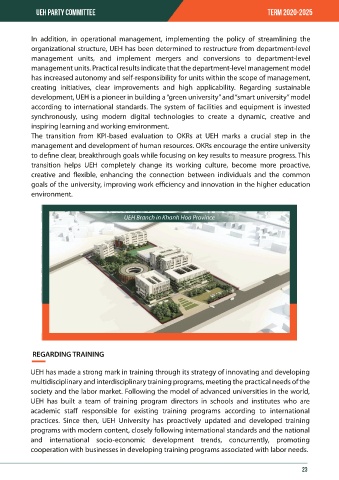
                                             UEH Branch in Khanh Hoa Province


            REGARDING TRAINING

            UEH has made a strong mark in training through its strategy of innovating and developing

            multidisciplinary and interdisciplinary training programs, meeting the practical needs of the
            society and the labor market. Following the model of advanced universities in the world,
            UEH has built a team of training program directors in schools and institutes who are
            academic sta  responsible for existing training programs according to international
            practices. Since then, UEH University has proactively updated and developed training
            programs with modern content, closely following international standards and the national
            and international socio-economic development trends, concurrently, promoting

            cooperation with businesses in developing training programs associated with labor needs.


                                                                                                           23

